
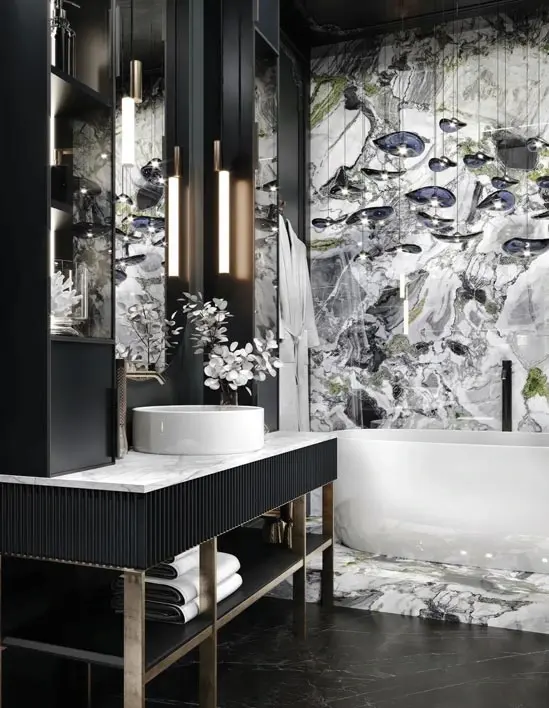
The shift from a sterile, monochromatic bathroom trend is making room in favor of spaces defined by texture, tactility, and material variety. In today’s modern design, materials are carefully and intentionally selected to provide warmth, depth, and a sense of natural movement, with finishes that gain character over time rather than feeling static or overly polished.
This change reflects the broader trend toward bathrooms that feels more grounded and sensorial rather than clinical. Texture is now a primary design tool, it is used to add depth, warmth, and visual interest while reinforcing a more relaxed, livable environment.
Wallpaper and Statement Walls
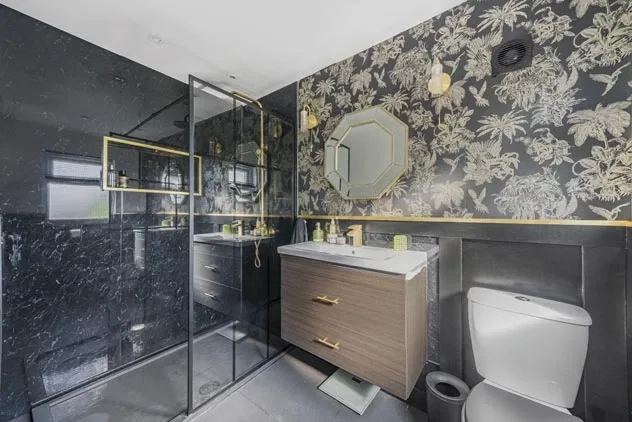
Wallpaper has officially entered the master bathroom. Wallpaper design strategies include half-tile, half-wallpaper combinations, murals and graphic designs. Another trend includes wainscoting and bold wallpaper designs in powder rooms where impact is prioritized.
The color strategy can shape how the bathroom is perceived. Color is now used for monochromatic layering to visually define areas for bathing, showering and grooming without relying on physical walls or partitions.
- Monochromatic Layering and Accent Dosing: This involves using varying shades of the same earthy neutral color, such as a clay-toned tile, a sandy wall, and a taupe ceiling, to create a natural, organic vibe that feels both expansive and cozy. While accent dosing defines the functional spaces within the bathroom.
Tile Shapes, Grout, and Patterns
While large-format porcelain slabs (often 48" x 96" or larger) are the gold standard for eliminating grout lines, we are experiencing a resurgence in patterned tile:
- Geometric Layouts: Hexagon, chevron, Moroccan zellige, and mosaic tile layouts are used specifically on accent walls to define zones, such as the shower or the vanity backdrop.
- Intentional Grout: Grout color and contrast are now intentional design decisions. Using contrasting grout can turn a simple grid layout into a graphic statement, while matching grout creates a more uniform, natural-stone effect.
Mixing Metals and Hardware Finishes
Mixed-metal finishes have been a defining trend this year, but achieving cohesion depends on a thoughtful framework. When mixed-metal finishes are selected with intention, they can create contrast without visual tension and contribute to a more layered, collected result.
- The Hierarchy of Finishes: Choose one primary finish (like brushed brass or gold) for 70% of the room, usually the faucets and showerhead. Then use a secondary finish (such as matte black or bronze) for the remaining 30%, typically on the mirror frames, vanity hardware, and lighting.
- Finish-Led Design: Brass and gold continue to drive contemporary bathroom aesthetics, but they are increasingly balanced with darker, weightier finishes to keep the space from feeling overly flashy or visually overstated.
Layered Lighting as a Decorative Focal Point
The return to chandeliers, pendants, and sculptural sconces is back but placement is key. To support your spa ambiance use a three-tier system to help you achieve your effect.
- Ambient Lighting: General illumination, often provided by dimmable recessed ceiling fixtures.
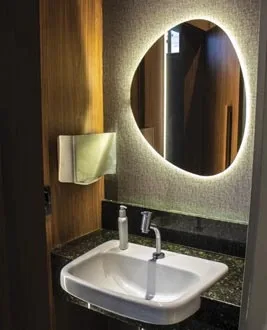
- Task Lighting: Focused light on the mirror, preferably with an LED mirror, using sconces at eye level to eliminate shadows.
- Accent Lighting: This includes LED mirror in niches, under vanities, or even toe-kick lighting that serves as a guide for nighttime use without disrupting sleep cycles