
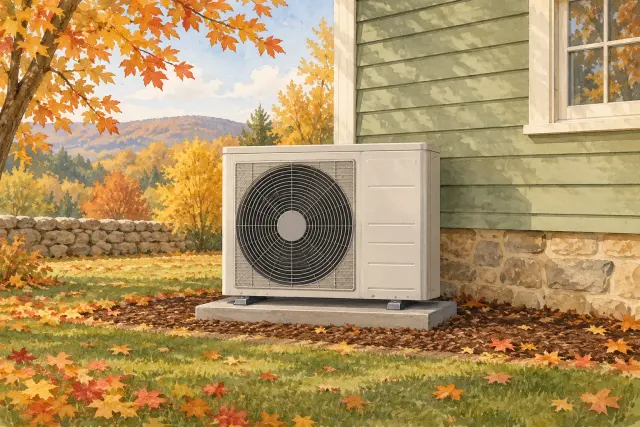
Conceptual scene for this article. Editorial illustration; not a documented local project or an installation specification.
A heating replacement is easier to evaluate before the old system becomes an emergency. If a heat pump is on your list, use the first conversation to understand the complete project: the house it serves, the equipment arrangement, electrical needs, controls and the plan for colder conditions.
For Lehigh Valley homeowners, a useful proposal explains how the selected system will operate in this particular home. A product rating or a neighbor's experience cannot answer every question about your layout, existing equipment or comfort priorities.
Bring the house history
Collect utility bills, existing equipment information, maintenance records and notes about rooms that are hard to heat or cool. Tell the contractor about planned additions, insulation work or layout changes. Those plans may affect the assessment and the sequence of improvements.
Ask whether a home energy assessment would help resolve questions about the building before equipment is selected. DOE’s assessment guide describes this as a way to identify priorities. An assessment is particularly useful when the problem seems larger than an aging appliance alone.
Ask how capacity was selected
Request the basis for sizing and the operating conditions used in the design. DOE’s residential heat-pump purchasing guidance discusses efficiency and installation considerations. Its federal purchasing rules are not homeowner requirements, but the attention to equipment selection is a useful reminder to compare specific systems.
Ask for the exact indoor and outdoor model combination, not just a brand or product family. Have the contractor explain the proposed heating and cooling performance, what the ratings mean and which assumptions affect the estimate for your home.
Review the whole installation
For a ducted proposal, ask what has been evaluated about the existing distribution system and what modifications are included. For a room-based arrangement, review indoor-unit placement, doors, air movement and how adjoining spaces will be served. Ask how condensate and service access are handled.
Have a qualified electrician evaluate the electrical scope. Request a description of circuits, panel work or other upgrades if needed. Confirm which trades and permit responsibilities are included so a low equipment price does not conceal substantial work outside the proposal.
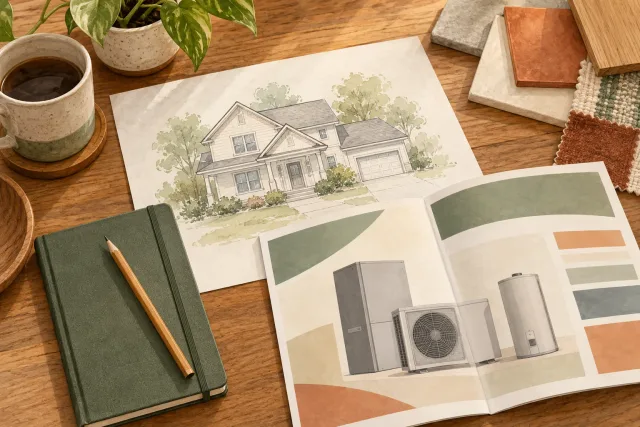
Understand cold-weather operation and controls
Ask how the selected system is intended to operate during colder weather and whether supplemental or existing heat will remain. Request a plain-language explanation of when each component operates and who sets up the controls. Discuss outdoor-unit placement, snow exposure, drainage and access using the manufacturer's requirements.
At the walkthrough, ask how you will adjust the thermostat and recognize a service issue. Avoid choosing a system based on an unsupported promise that one operating strategy is best for every home. The commissioning and homeowner instruction should match the actual design.
Compare costs with stated assumptions
Request the installed scope, maintenance expectations, warranty and any operating-cost estimate separately. Ask which utility rates and usage assumptions support the estimate. If incentives are part of the sales discussion, verify the current program and eligibility before relying on them; no specific rebate is assumed here.
Keep the proposal, commissioning information and service contacts together. Our heating-system maintenance guide can help prepare your existing-system history. Use the YHR directory to begin interviews with relevant local professionals.