
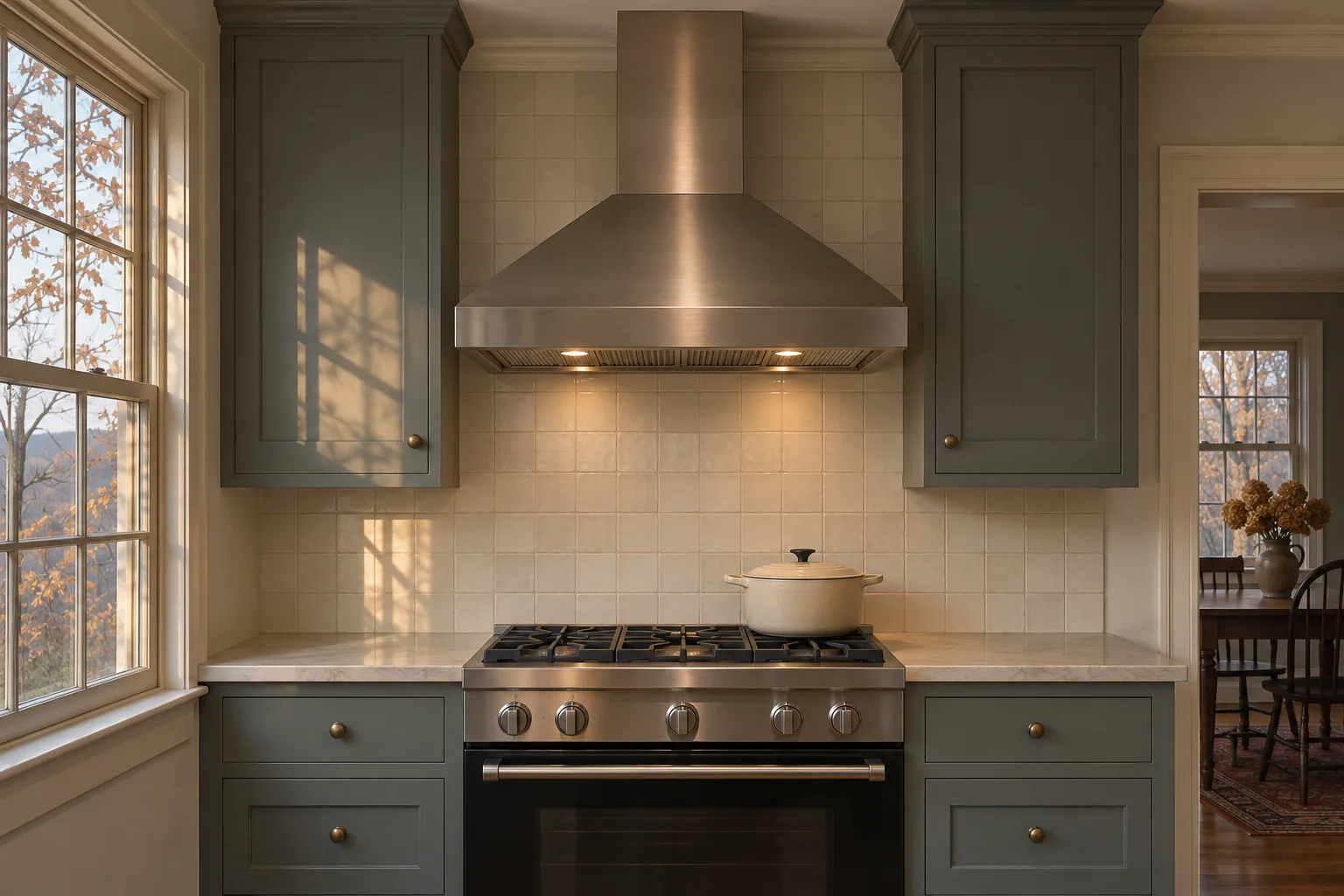
You’re browning onions for the stuffing. Someone at the table asks a question, so you turn the hood down to hear them. By dessert, the kitchen is quiet and the living room still smells like onions. Before putting a louder fan on the wish list, find out where the air from this one goes.
Find the exit
A recirculating hood draws air through filters and returns it to the room. A ducted hood sends it outdoors. Both can have a stainless chimney above the stove. Even a model designed for either setup can only do what its installer configured it to do.
Start with the model number and manual. From the floor, look for an accessible section of duct in the cabinet above the hood. If the route disappears behind a wall, put a question mark there on your sketch. Ask the installer to identify the outdoor termination. That distinction matters in an older Lehigh Valley kitchen where several generations of cabinetry and appliances may have occupied the same wall.
Try the setting you’ll actually use
At your next dinner, notice which speed you leave on through the meal preparation. Can you talk across the counter? Are the controls reachable with a pot on the stove? When shopping, compare the airflow and sound ratings at that everyday speed. Airflow is typically listed in cubic feet per minute, and noise in sones. A maximum airflow figure on one label and a low-speed noise figure on another tell you little about how those two hoods will feel at dinner.
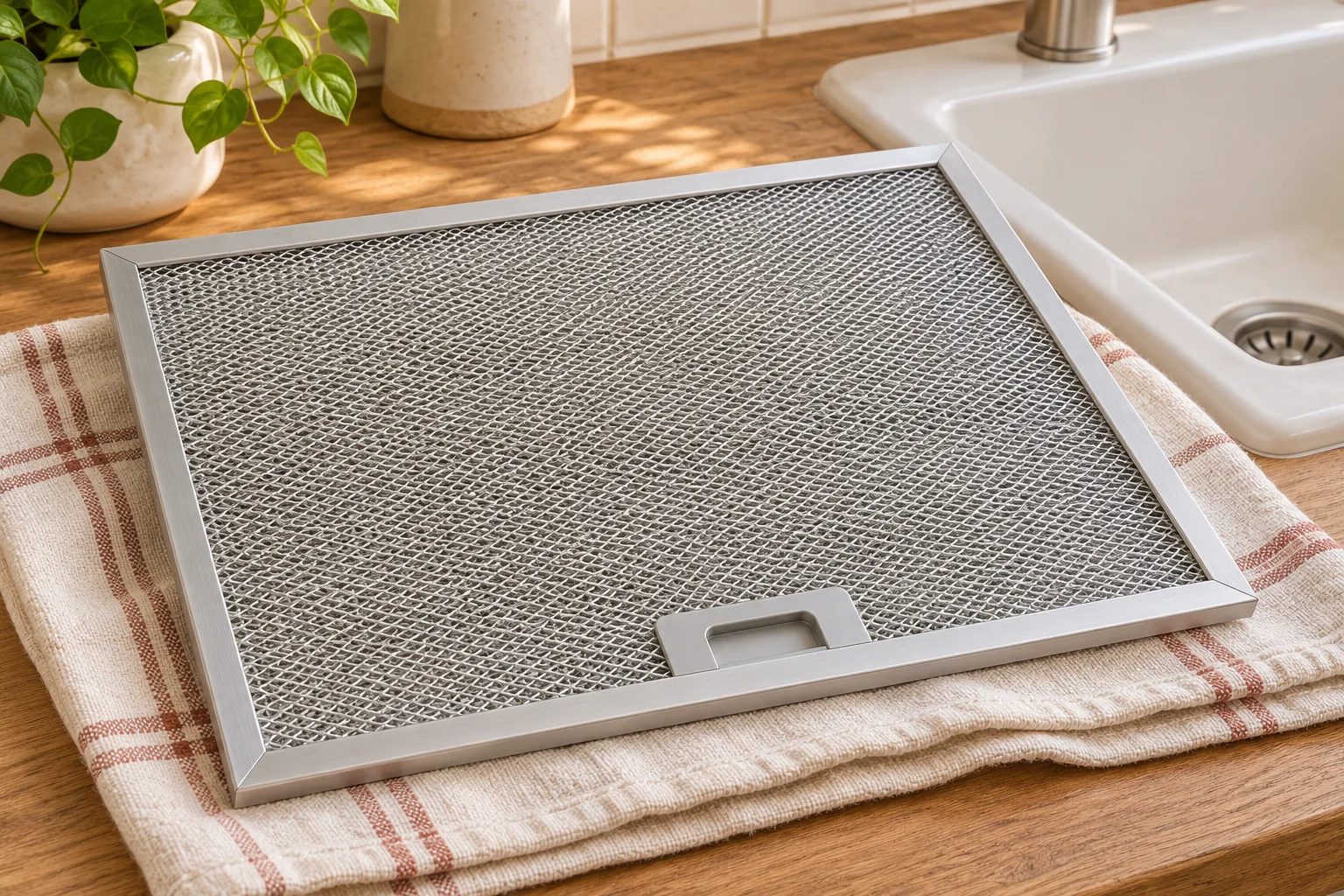
Ask to see how the grease filter comes out. Look at the latch, the weight of the filter and the space it needs to tilt free. Check the model’s cleaning instructions before deciding whether a particular filter will fit your routine.
Put the duct on the cabinet drawing
If you’re replacing cabinets, have the designer and installer mark the hood, duct and outdoor exit on the same drawing. An interior range wall might require a soffit or take up part of an upper cabinet. It’s easier to give up a shelf on paper than after the cabinets arrive. The Building America retrofit guide calls for a direct route and the duct size specified for the equipment. Extra turns can reduce the airflow delivered at the stove.
Ask how the installer will check the finished airflow and whether the home needs replacement air when the exhaust is running. Mention a fuel-burning water heater or furnace when discussing the job. The way those appliances vent can affect the design.
For the meal you’re cooking now
If your hood vents outside, turn it on when cooking begins. Use a back burner when the pan and recipe allow it, and let the fan run for another 10 to 20 minutes after cooking. These are the EPA’s kitchen ventilation recommendations. For a remodel, take your route sketch and the fan setting you found comfortable to the first design meeting. Together they give the installer a specific problem to solve.