
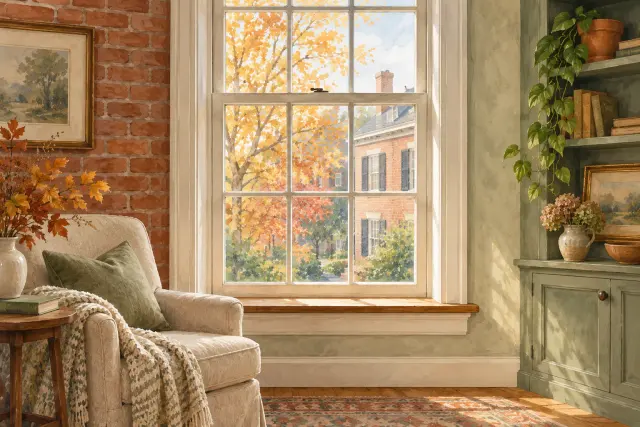
Conceptual scene for this article. Editorial illustration; not a documented local project or an installation specification.
A draft beside a window can make replacement feel like an obvious next step. Yet an older window is an assembly with several parts, and the surrounding wall can contribute to the problem. Before ordering a house full of new units, ask for an assessment that distinguishes repairable components from more extensive deterioration.
For a Lehigh Valley house with older wood windows, the choice also affects interior trim, exterior proportions and the character of the rooms. A careful comparison starts with the condition of each opening and the result you want.
Describe the actual problem
List sticking sashes, broken hardware, visible decay, damaged glazing or air movement you notice. Photograph the same area inside and out from a safe position. Record whether the issue affects every window or only a few exposed locations.
Ask the professional to distinguish the window itself from installation or surrounding-wall issues. A proposal should explain what the recommended work addresses. “Old windows” is a description of age, not a complete diagnosis of performance.
Include repair in the comparison
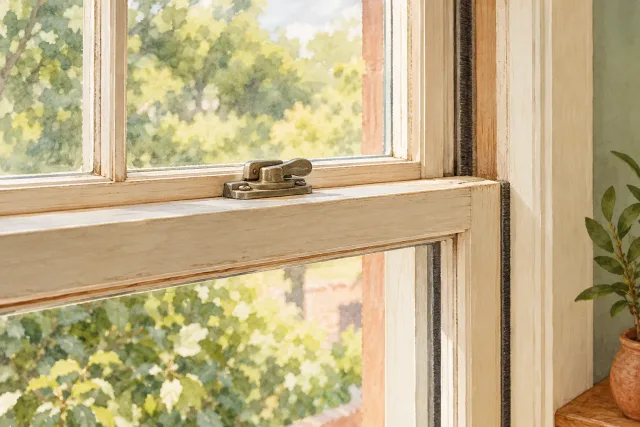
The National Park Service’s window-weatherization guidance explains that historic windows can often be repaired or upgraded. Ask whether hardware repair, weatherstripping, glazing work or a suitable storm-window approach is feasible for the particular units.
Compare repair with replacement using the same goals: reliable operation, comfort, maintenance, appearance and any project-specific requirements. Avoid assuming that either option automatically has the lowest lifetime cost. Request an assessment of the work and future care each would involve.
Understand the replacement method
If replacement is recommended, ask which existing parts stay and which are removed. Review the effect on visible glass area, interior trim, exterior details and wall repairs. Have the contractor explain how the opening and water-management details will be handled.
Use the exact selected product information to compare proposals. Confirm operation, finish, screen arrangements and service access. Ask how any discovered deterioration will be documented and priced rather than assuming the base installation includes every possible repair.
Plan older-paint and approval questions
Window work can disturb painted surfaces. For a pre-1978 home, review EPA’s consumer guidance on lead-safe renovation and confirm the relevant contractor qualifications and work practices. Keep cleanup and protection requirements in the scope.
If the property has a historic designation or is within a regulated district, ask the appropriate local office about review before ordering. Have the same office confirm applicable permit requirements for the actual scope. A neighbor's approved product does not establish approval for your house.
Make the choice opening by opening
A mixed plan can be worth discussing: repairing sound units while replacing those that cannot reasonably meet the project goals. Ask how that approach affects appearance, mobilization and future phases. A phased order should still have a consistent specification and a record of what has been completed.
Before signing, request a written summary of condition, proposed treatment, finish repairs, protection and warranty terms. Keep photographs of representative openings with the final documents. The goal is a decision you can explain beyond the age of the windows.
Our window upgrade guide offers more questions for the product discussion. Bring the condition list to a local window or restoration professional and ask for a recommendation tied to your home's specific openings.