
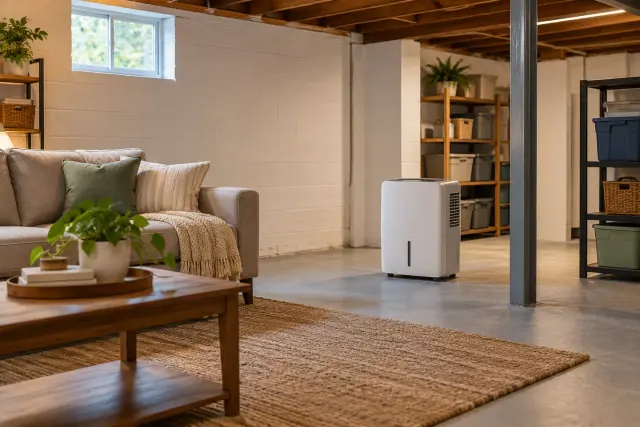
A basement can feel cool and still need attention to moisture. Editorial illustration; not a documented local project.
The basement is cool, but it still feels clammy. A cardboard box has gone soft at the corners, the guest-room rug smells musty, or water beads on a cold pipe. Before you order new flooring or buy the largest dehumidifier on the shelf, find out what is getting wet—and when.
For Lehigh Valley homeowners using a basement as a playroom, office, workout space or storage area, July is a useful time to take stock. The goal is a room you can use comfortably, with a moisture plan that protects the improvements you make next.
Start with a reading, then look for a pattern
A small digital hygrometer measures relative humidity. Put it in the area you actually use, following its placement instructions, and record the temperature and humidity morning and evening for several days. Note rain, laundry use and whether the windows were open. If a separate room feels different, take readings there, too.
The U.S. Environmental Protection Agency recommends keeping indoor relative humidity below 60 percent, ideally between 30 and 50 percent. For a first dehumidifier setting, try 50 percent and check the room with your separate meter. Treat that as a starting point to evaluate, rather than a promise that every surface is dry.
Make the notes specific: “guest-room corner damp after Tuesday’s rain” gives a contractor more to work with than “the basement is always bad.” Photograph recurring wet spots from the same position. Keep the record simple enough that you will continue it.

Separate humid air from water getting in
A damp basement can involve more than one moisture source. University of Minnesota Extension identifies rain and groundwater, indoor activities, and humid outdoor air as sources. The distinction matters because removing water vapor from the air does not repair a leak.
- Water appears after rain: record its location and ask for a drainage or building-envelope assessment. From a safe position at ground level, observe where gutters overflow or downspouts discharge.
- A pipe or fitting is actively leaking: have the plumbing problem repaired before choosing finishes for the surrounding area.
- Cold surfaces develop droplets during humid weather: ask whether condensation is contributing, rather than assuming every wet wall needs the same waterproofing treatment.
Opening a basement window can feel like an easy refresh. However, Extension explains that warm, humid outdoor air can condense on cool basement walls and floors. On those days, an open window may add moisture. Keep windows closed while a dehumidifier runs, as ENERGY STAR advises.
For water entering through the foundation, use our Basement Waterproofing Cost Guide as background for a contractor conversation. Request a diagnosis and a written scope for your property before comparing proposed systems.
Choose a dehumidifier for the room you have
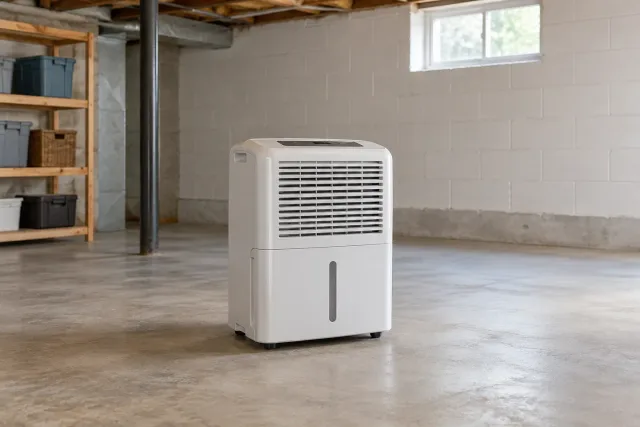
Shopping by the size of the water bucket can be misleading. ENERGY STAR explains that dehumidifier capacity is measured in pints removed per 24 hours; the appropriate capacity depends on both the size of the space and how damp it is. Use its buying guide alongside the manufacturer’s specifications.
Before comparing models, write down the basement’s approximate area, typical temperature, humidity readings and layout. Include whether you keep doors between rooms closed. Those details make it easier to discuss a portable unit or ask an HVAC contractor whether a broader solution deserves consideration.
Plan for everyday use
Think through where the appliance will go before bringing it home. Can you reach the controls without moving furniture? Will its noise interrupt calls from your basement office? Is emptying a bucket realistic when you are away for a weekend?
Check the unit’s operating-temperature range, required clearances and drainage instructions. ENERGY STAR notes that cooler spaces may need a model designed for lower temperatures, and that hose drainage is available on some units. Decide how water will be collected or discharged before installation; have a professional resolve questions about a suitable drain or pump.
After setup, keep a brief log of the room readings and bucket-emptying routine. If the result falls short, bring that record to the installer or manufacturer rather than guessing at another purchase.
Give a basement remodel a moisture checkpoint
New cabinets, flooring and wall finishes are the enjoyable decisions. Put a moisture review ahead of them. Extension cautions that finishing a basement before addressing moisture problems can lead to damage. Ask the remodeler to explain how the proposed work responds to your basement’s conditions.
In an Allentown, Bethlehem or Easton home, a useful walkthrough can start with three things: your observation log, a sketch of how you want to use the room, and a list of anything the next owner or service technician will need to reach. Show the contractor the areas you normally cover with furniture or storage.
- Before choosing flooring: ask which substrate moisture tests the flooring manufacturer requires, who will perform them and how the results will be documented.
- Before enclosing walls: ask how the assembly addresses moisture and where access will remain for valves, drains and equipment.
- Before approving built-ins: mark service access on the drawing and agree on what can be opened or removed.
- Before signing: separate the moisture work, finish work and any follow-up visits in the written proposal.

Make the room’s intended use part of the discussion. An occasional storage area and a daily office have different practical needs for sound, furniture placement and maintenance access. A good plan should explain how you will operate and look after the space once the contractor leaves.
Know when to bring in help
Standing water, repeated leaks, recurring visible mold or a persistent unexplained musty smell deserve investigation. A pleasant scent or a fresh coat of paint does not establish that the underlying problem has been resolved.
EPA advises drying water-damaged materials within 24 to 48 hours and correcting the moisture source. Its mold guide also calls for experienced professional help when sewage or other contaminated water is involved. For extensive or recurring damage, discuss cleanup and repair together rather than treating them as unrelated jobs.
Match the first call to what you have observed: a plumber for a plumbing leak, an HVAC professional for humidity-control equipment, or a contractor experienced in basement drainage for water entry. Ask each person what their proposed work addresses, what remains outside the scope and how you will evaluate the result.
Your first step this week
Measure the room, photograph the trouble spots and start the humidity log. If a basement renovation is on your wish list, bring that information to a walkthrough before selecting finishes. You will have a clearer brief—and a better basis for deciding where to spend.
Ready to discuss the next step? Browse the YHR PRO directory for local businesses, then confirm that the professional you contact handles the work your basement needs.