

When a renovation takes place in a house you still occupy, the project boundary matters almost as much as the floor plan. Dust, equipment deliveries and workers' routes can affect rooms that are outside the contract drawings. Discussing those details before work starts gives everyone a clearer daily routine.
A dust plan should describe the work being done and how the home will be used during it. It is not enough to hear that the crew will “put up some plastic.” Ask what that protection means for this project, who maintains it and when a different arrangement may be needed.
Identify the materials before disturbing them
Tell the contractor the home's age and any known history of hazardous materials. Ask what assessment is appropriate before demolition or surface preparation. Do not cut, sand or remove an unknown material simply to identify it.
EPA’s consumer guidance for renovation in pre-1978 homes explains the lead-dust concern and recommends an appropriately certified lead-safe contractor. Lead and possible asbestos call for specific procedures beyond an ordinary housekeeping plan. Resolve who will evaluate these concerns before the crew disturbs the affected area.
Draw the boundary and the daily route
Mark the work zone, household living areas, delivery entrance and debris-removal path on a simple plan. Decide where workers can store tools and where occupants can safely walk. Include pets, children and anyone who may have difficulty following a changing route.
EPA’s remodeling air-quality guidance discusses isolating work areas and controlling pollutants. Have the contractor explain the containment suitable for the planned activities, how entry openings will be managed and what happens if the barrier is damaged.
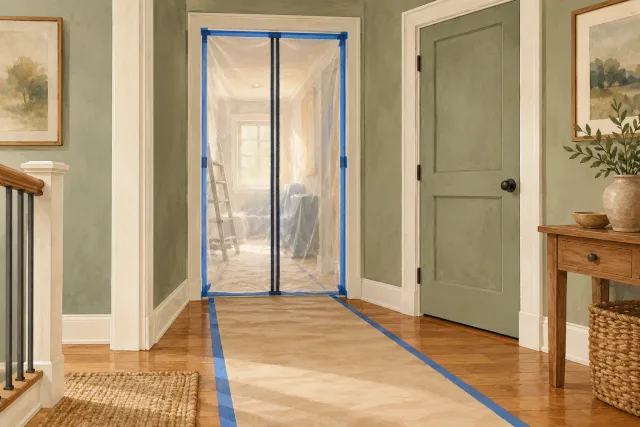
Coordinate air movement with the work
Ask how dust-producing activities affect the home's heating, cooling and ventilation systems. EPA identifies registers in the work area as a potential concern during dusty work. The contractor and relevant HVAC professional should agree on the approach for the actual equipment and occupied spaces.
Request an explanation of any exhaust or air-cleaning equipment, where it operates and how its performance will be checked. Opening a window or buying a portable filter is not a substitute for containing the source. Ask when occupants may use the affected rooms again.
Put cleaning and inspection in the scope
Define daily cleanup, debris handling and final cleaning separately. Ask whether the estimate includes protecting the delivery route, removing protection, cleaning adjacent areas and disposing of waste. For work governed by specific hazardous-material rules, confirm the applicable cleaning and verification procedures with the qualified contractor.
Agree on where issues are reported. A daily photograph of the boundary and a short written note about the next day's work can help you spot a changed route or an open doorway before it becomes a habit. The point is a manageable communication routine, not constant homeowner inspection of active construction.
Decide when the house will be occupied
Ask which phases are suitable for occupancy and whether temporary relocation should be considered. If someone has a health condition affected by renovation exposures, discuss the proposed work with their clinician and the project team. Set a plan before the noisy or dusty phase begins.
Keep the protection plan with the contract and schedule. Our guide to renovating with children offers more household planning questions. Bring your access needs to a local remodeling professional at the first walkthrough.