

A misty window can change the feel of a room before you have finished your morning coffee. For Lehigh Valley homeowners heading into the heating season, it is also a useful prompt to look more closely at moisture, ventilation and the window itself.
Start with a simple question: where is the water? A damp room-facing pane, dew outdoors and haze trapped between panes call for different responses. A few observations now can make the next conversation with a window or HVAC professional much more productive.
Find the surface that is wet
From a safe indoor position, check whether the moisture wipes off the room-facing glass. Note which windows are affected and whether it appears after showers, cooking or an overnight temperature drop. Photograph the pattern before drying it.
Indoor condensation forms when glass is cold enough for moisture in the room air to condense on it. ENERGY STAR explains that even efficient windows can develop condensation in cold weather. Room-side droplets alone do not settle the question of whether a window needs replacement.
Haze between the panes of an insulated glass unit deserves a different conversation. Andersen identifies between-pane condensation as a sign of seal failure. Ask a window professional to confirm its location and assess the glass unit, sash and frame. Exterior dew can also occur; the location matters before you choose a remedy.
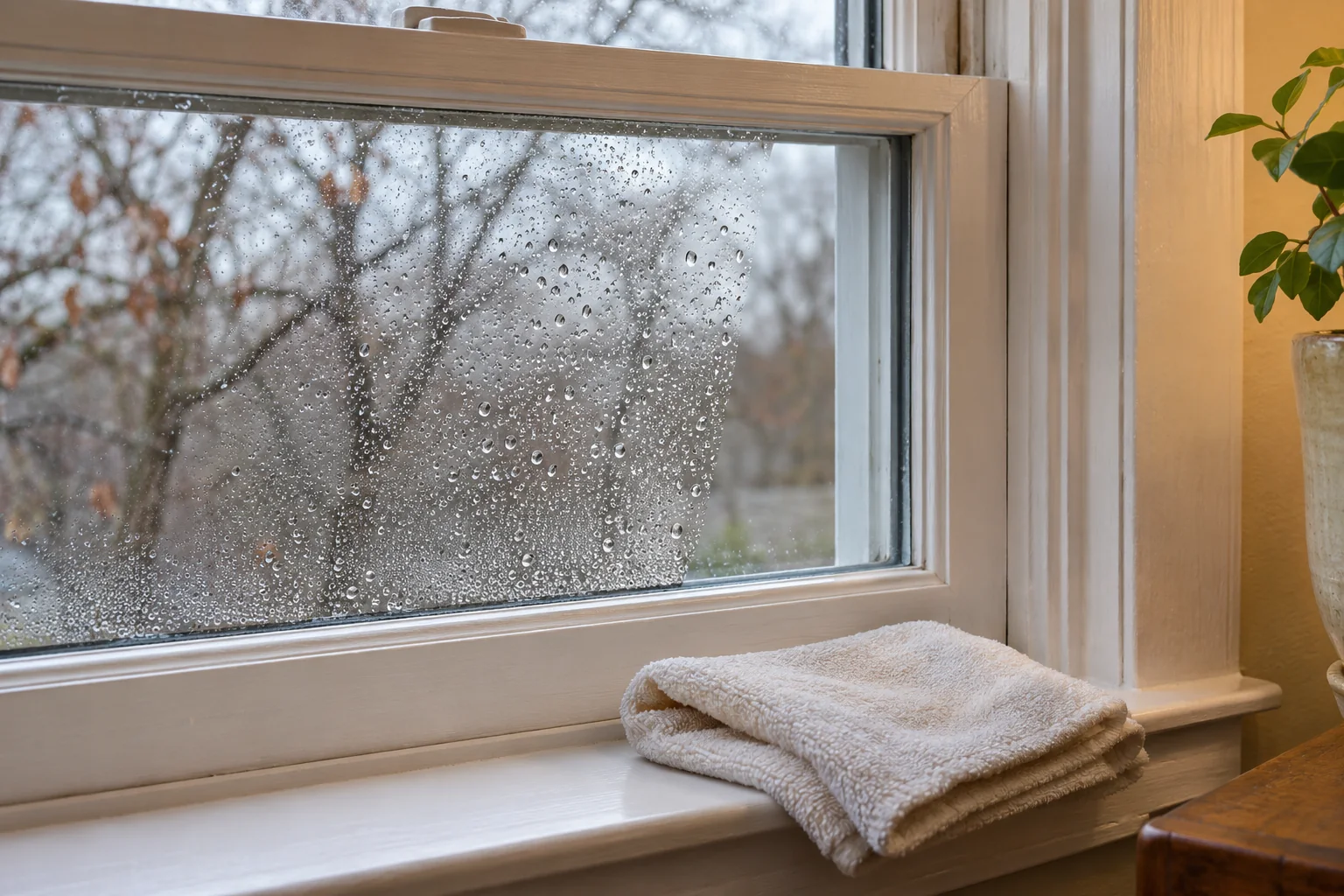
Dry it, then watch for a pattern
Wipe up room-side water rather than leaving a wet sill until the afternoon. The EPA’s moisture guidance recommends drying condensation promptly and reducing its source. Keep curtains and other absorbent materials away from the wet area.
Make a short record over several mornings: room, time, weather, recent household activities and whether the moisture returns after drying. Check another window in the same room. Note damp trim, staining or peeling finishes separately. These observations give a professional more to work with than a single photograph of fogged glass.
Measure humidity before adjusting it
Use a room humidity meter to add a reading to your notes. Follow its placement instructions and record the room temperature too. Compare readings at similar times, including before and after a shower or meal preparation, instead of relying on one number taken beside a steamy bathroom.
The EPA recommends keeping indoor relative humidity below 60 percent, ideally between 30 and 50 percent where possible. That general range does not guarantee dry glass on every cold morning: condensation also depends on the window’s surface temperature. If droplets persist, bring both the readings and the window observations to the assessment.
If you use a humidifier, check its settings and instructions rather than automatically increasing output when the heat comes on. Tell your HVAC professional about any recent humidifier changes, new windows or air-sealing work.
Give everyday moisture a route outdoors
Check the routines that add moisture to the house. Use the bathroom exhaust fan during showers and the kitchen exhaust fan when cooking. ENERGY STAR recommends continuing these fans for 20 minutes afterward and making sure bathroom and kitchen exhaust, along with the clothes dryer, vents directly outdoors.
A fan’s sound tells you it is switched on; ask a qualified professional to confirm airflow and the duct’s destination if either is uncertain. A recirculating range hood does not provide the outdoor exhaust described in that guidance. Add weak extraction or an unknown duct route to your service list.
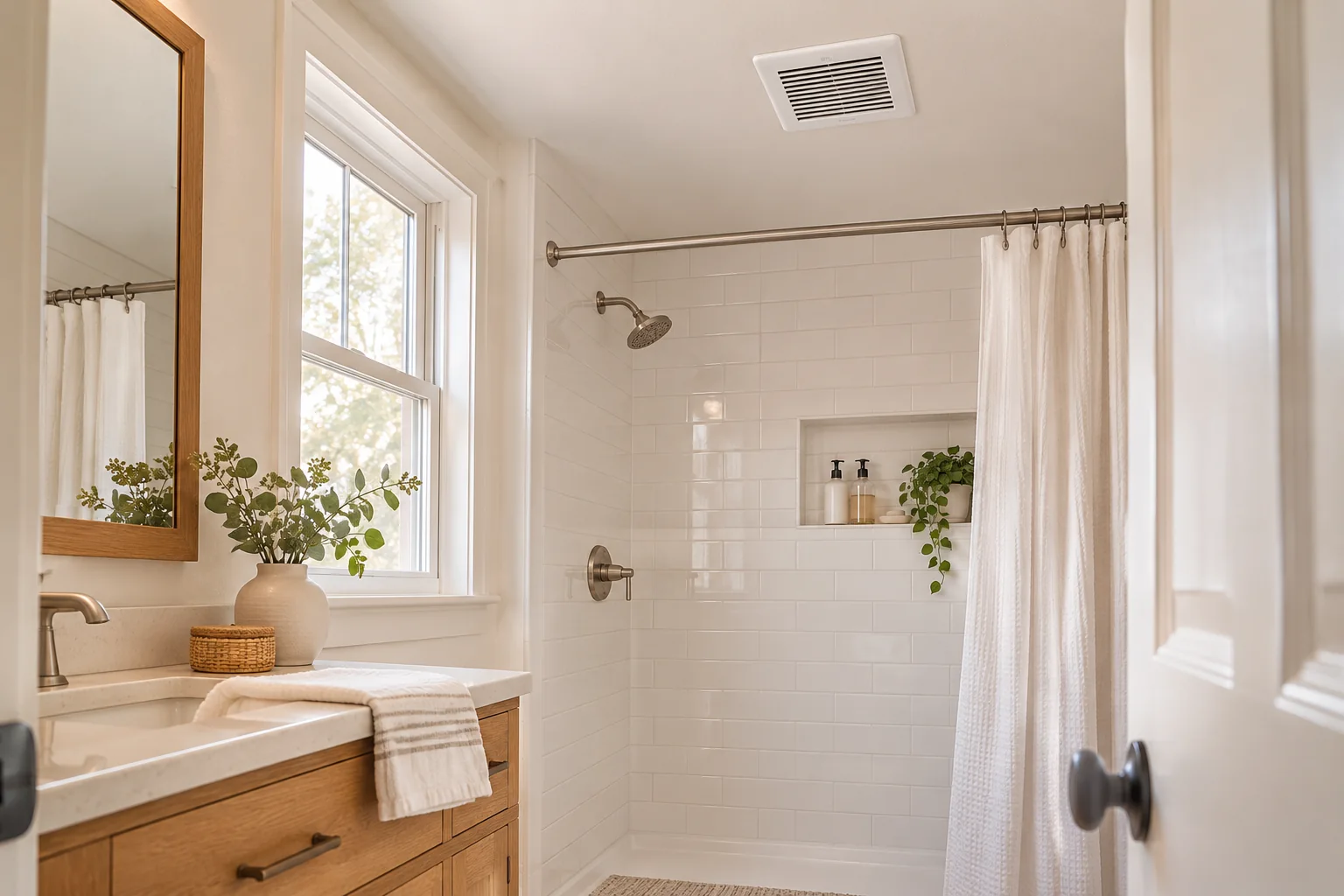
Look at airflow, then define the next step
ENERGY STAR also recommends window treatments that allow air to move over the glass. Notice whether a tightly closed shade or heavy drape isolates a cold pocket at the window. Open treatments where practical and keep furnishings clear of room air outlets. Include any difference in your morning notes.
Arrange an assessment if moisture keeps returning despite changes to household routines, or if you find persistent dampness, deteriorating trim, water associated with rain, or haze between panes. Describe what you have observed without assuming every wet window has the same cause.
Ask the professional to separate the findings: indoor moisture and ventilation, window operation and glass condition, and possible water entry around the opening. Request a scope that explains the proposed repair and what it is intended to address. Our guide to assessing older windows can help you prepare for that discussion.
Your first November task is manageable: dry the wet surfaces, record a few mornings and check how the house removes moisture. Bring that record to a local professional when the pattern calls for a closer look.