
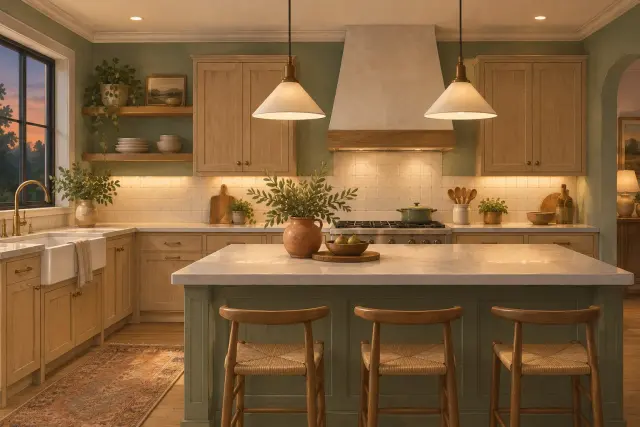
Conceptual scene for this article. Editorial illustration; not a documented local project or an installation specification.
A kitchen that feels bright at noon can become frustrating after sunset. Your body may cast a shadow over the worktop, a pendant may reflect sharply in a glossy surface, or the only switch may turn every fixture on at once. Before replacing lights, observe how the room works during an ordinary evening.
For a Lehigh Valley homeowner planning a fall refresh, this is a useful project even when the cabinets are staying. Start with the activities and surfaces, then select fixtures and controls that support them.
Map the evening tasks
Stand where you chop vegetables, wash dishes, read a recipe and unload groceries. Note the light reaching the task and where shadows fall. Look at the path between the refrigerator, cooking area and dining space. Ask another household member to repeat the exercise, since height and position can change the experience.
Take photographs for reference, but judge the actual room too. A phone camera may brighten a dark scene or make glare look different. Keep a short list of the locations that need improvement rather than starting with a shopping list.
Give the work surfaces their own attention
Discuss task lighting where you prepare food and use small appliances. For an under-cabinet option, ask how the fixture is positioned and shielded, how wiring is concealed and where its power supply remains accessible. Review the effect on both the counter and backsplash.
Try a sample or demonstration where practical. A fixture that disappears beneath the cabinet may still create a bright reflection in polished stone. Ask the designer or electrician to help evaluate the installed relationship rather than judging the light in isolation.

Choose color appearance and controls together
ENERGY STAR’s current downlight guidance explains color appearance and directs buyers to compatible dimmers. Compare the selected products' specifications and manufacturer compatibility information. A dimmer and an LED fixture need to work together; the word “dimmable” alone does not settle the pairing.
View samples near the actual cabinet and countertop finishes. Decide whether adjoining rooms should feel similar when seen together. Ask how the chosen products behave at lower settings and whether replacement components will be available.
Separate the useful lighting scenes
Consider which lights you want for cooking, cleaning, dining and moving through the room after dark. Ask whether separate switching or dimming would make those routines easier. A few understandable controls may serve the household better than a complicated scene system nobody uses.
Have a qualified electrician assess wiring changes and any relevant permit requirements. Include wall and ceiling repairs in the scope. If ceiling fixtures connect to an attic above, discuss the assembly and product requirements with the project team rather than treating the opening as only a decorative decision.
Check the finished room after dark
Repeat the original task walkthrough once the lights are installed. Look for glare, visible bright points and shadows at the work surface. Ask the installer to explain the controls and leave the model numbers and compatibility information with your records.
For a larger renovation, use our kitchen planning sequence to connect lighting with cabinetry, appliances and the work schedule. Bring your evening observations to a local kitchen designer or electrical professional so the next fixture choice has a clear purpose.