
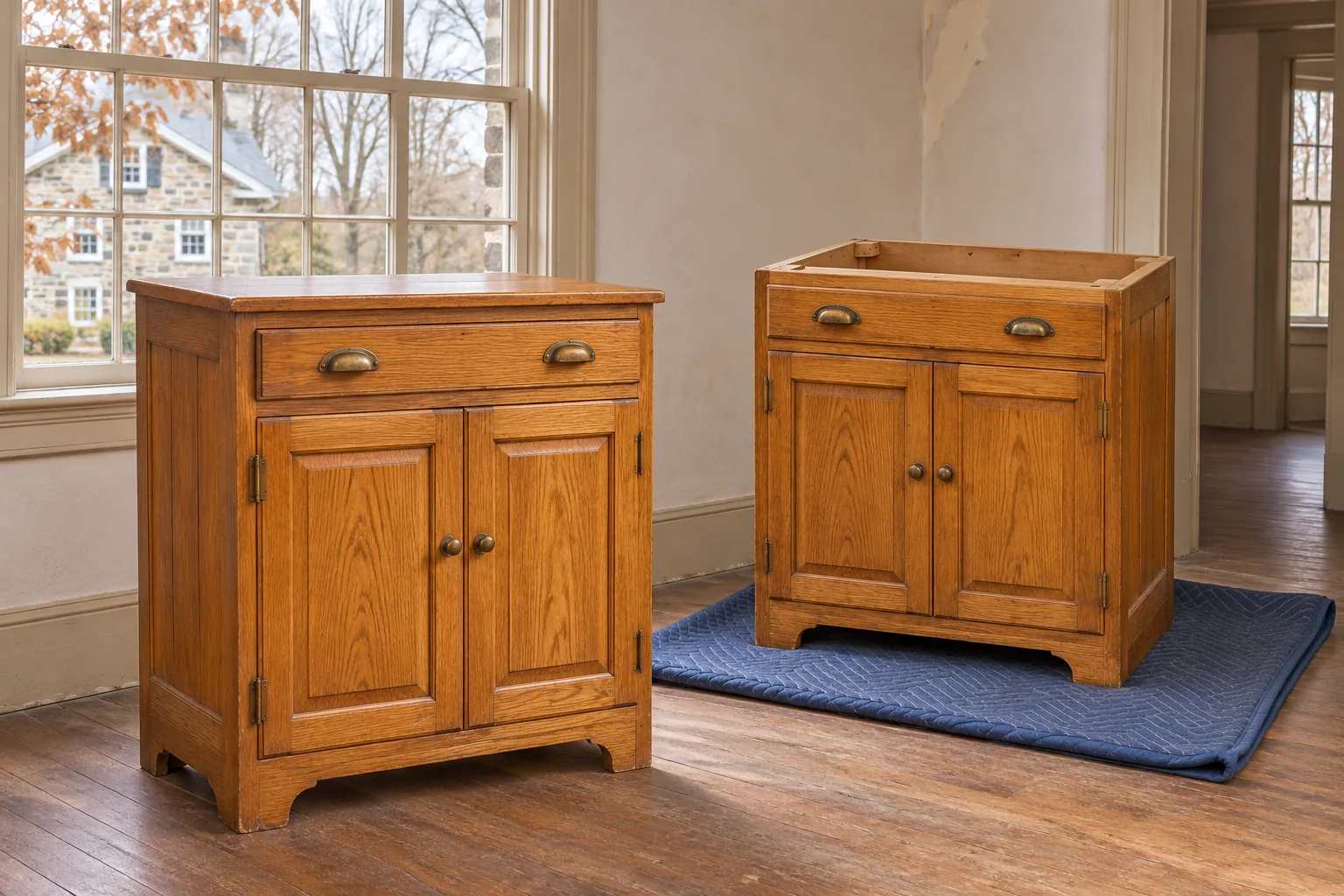
The narrow drawer beside the stove might be the one thing you’ll miss about your old kitchen. It could hold garden tools in the potting shed just as neatly as it once held wooden spoons. The bank of cabinets along the opposite wall might suit another household altogether. Decide which pieces have a destination while you can still open the doors and show someone how the drawers run.
Look inside the boxes first
Empty one cabinet at a time. Check the floor of the sink base for swelling, open the doors far enough to see the hinges, and slide each drawer all the way out. A scratched door and a soft cabinet bottom tell different stories. Photograph both. If one box has water damage, describe it separately so a recipient can consider the sound pieces on their own.
For anything you want to keep, measure its next home. A base cabinet that fits the width of a laundry-room wall may still block the dryer door when a drawer is open. Mark its footprint with painter’s tape and try carrying a laundry basket past it. That five-minute rehearsal can settle whether a cabinet deserves space in your garage all winter.
Give the next owner a picture of the whole set
Take a straight-on photo of each cabinet run before anyone removes the countertop. Then photograph the interiors, end panels and any damage. Record the width, height and depth of each box. A sketch with the sink, corner and drawer units marked is easier to match to a photo than a list of six measurements with no locations.
Choose a simple identifier for each unit. If your remodeler takes a door off for transport, put the same identifier on the box, the door and the bag of hardware. Keep loose shelves and their pins with the right cabinet. Habitat for Humanity’s donation guide asks that cabinetry be complete, in good condition and accompanied by the pieces needed to use it.
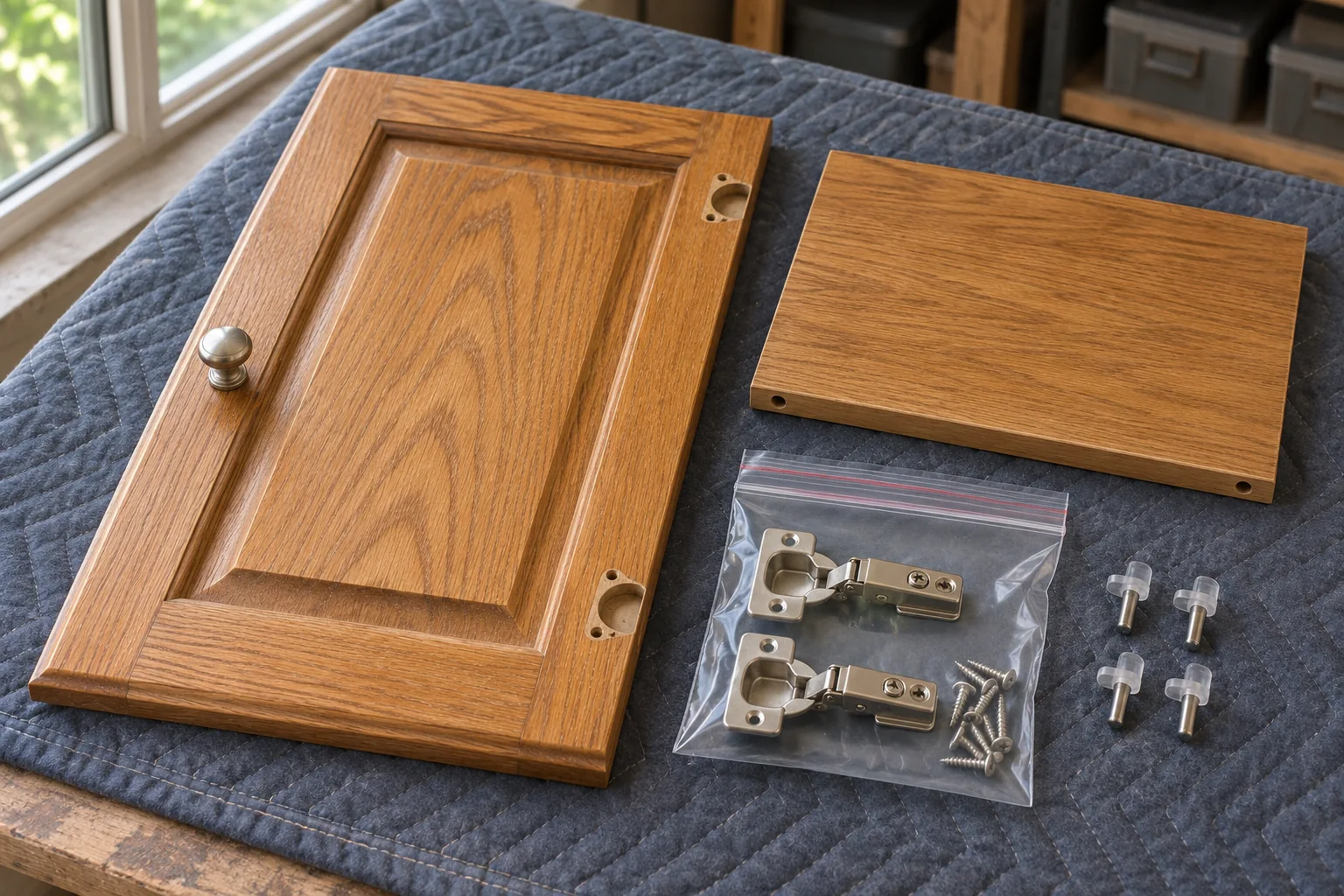
Arrange the handoff before demolition day
For a Lehigh Valley remodel, start with the local Habitat ReStore. Its pickup scheduler lists kitchen cabinets and asks households to use pickup for large donations that won’t fit in a pickup truck or SUV. The driver makes the final acceptance decision. Share the photos, dimensions and condition up front. Ask where the pieces need to be on pickup day and who will carry them there.
Walk the kitchen with your contractor and point to each piece you plan to keep or donate. Ask for the labor to remove it intact, any necessary disconnections, and a dry staging spot to be included in the scope of each bid. A pickup appointment and a crew to take cabinets off the wall are two separate arrangements. Agree on who handles each one, and what happens if a box comes apart or the recipient declines it.
Leave a copy of the marked-up photo with the crew lead. A circle around the three drawer bases and a note naming their destination can do more on a busy demolition morning than a general request to “save the good cabinets.”